
What Are the Key Factors Affecting the Performance of Phenolic Tubes
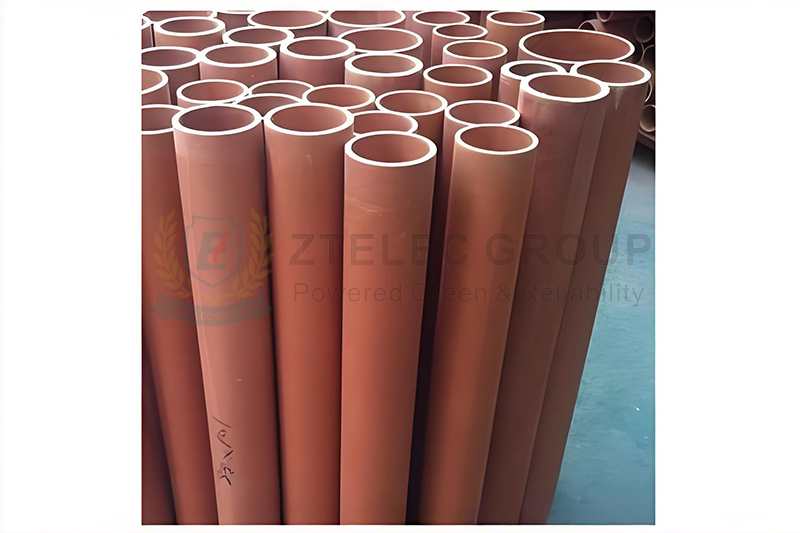
Phenolic tubes are commonly used insulating structural materials in power equipment, transformers, switchgear, motors, and various industrial electrical systems. Their performance directly determines the operational safety, stability, and service life of the equipment. For purchasers, design institutes, and manufacturers, understanding the key factors that affect the performance of phenolic tubes is a necessary prerequisite for scientific material selection and effective quality risk control. From the perspectives of materials, manufacturing processes, and applications, this article systematically reviews the core indicators that influence the performance of phenolic tubes.
1. Raw Material System
Type and Quality of Phenolic Resin
Phenolic resin is the core matrix material of phenolic tubes and directly determines their mechanical and thermal performance.
Resin molecular weight and crosslinking density determine the strength, rigidity, and aging resistance of the tube.
Heat resistance grade: High-quality phenolic resins ensure long-term stable performance of the tube in high-temperature environments.
Resin purity: Excessive impurity content will directly lead to a decline in the electrical insulation performance of the tube.
Reinforcement Materials (Paper-Based or Fabric-Based)
Common reinforcement materials for phenolic tubes include electrical insulating paper, cotton fabric, and fiberglass fabric.
Paper-based tubes: Suitable for insulating structures with moderate or relatively low mechanical strength requirements.
Fabric-based tubes: Offer higher mechanical strength and better impact resistance.
The fiber density and uniformity of distribution of the reinforcement materials directly affect the overall performance of phenolic tubes.
2. Porosity and Density
Low porosity reduces the penetration of corrosive media, improving both corrosion resistance and electrical insulation performance.
Uniform density ensures consistent mechanical properties throughout the tube and prevents localized weak points in performance.
3. Thermal Performance Indicators
Heat Deflection Temperature (HDT): Reflects the tube’s ability to resist deformation under high-temperature conditions and is a key indicator for high-temperature applications.
Coefficient of Linear Thermal Expansion: Affects the dimensional stability of the tube in environments with frequent temperature fluctuations.
4. Mechanical Performance Indicators
Flexural strength and tensile strength: Determine the structural load-bearing capacity of the tube.
Impact toughness: Reflects the tube’s ability to withstand sudden external forces or vibration, directly affecting its service life.
5. Chemical Corrosion Resistance
Phenolic tubes are often used in corrosive environments. Their resistance to acids, alkalis, and organic solvents depends mainly on two factors:
Resin type. For example, modified phenolic resins can significantly improve the tube’s alkali resistance.
Curing process parameters and surface treatment quality.
6. Water Absorption
Excessive water absorption can lead to a significant reduction in the electrical performance of the tube.
High-quality phenolic tubes reduce the number of internal micro-pores by optimizing resin formulations and hot-pressing processes, thereby improving moisture resistance.
7. Dimensional Accuracy and Surface Quality
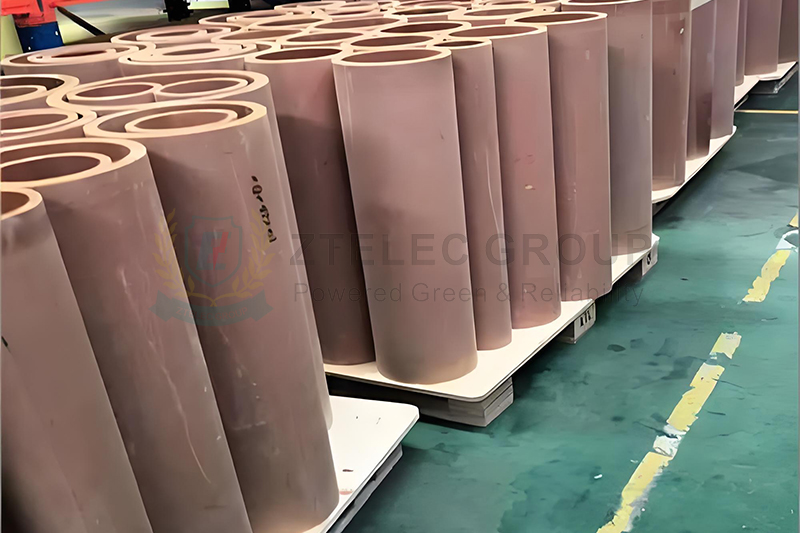
Precise dimensions: Ensure sealing performance during installation and enhance overall system reliability.
Smooth surface: Reduces fluid resistance and prevents the accumulation of corrosive media on the surface.
8. Manufacturing Process Control
Impregnation and Lamination Processes
Whether resin impregnation is sufficient, and whether lamination pressure and temperature are properly controlled, directly determines the compactness and uniformity of the tube’s internal structure.
Post-Treatment and Machining Accuracy
Appropriate curing, annealing, and precision machining processes can effectively improve the performance stability of phenolic tubes and ensure consistency in finished product quality.
9. Standards and Testing Indicators
High-quality phenolic tubes must comply with relevant industry standards. The core testing items include:
Dielectric strength testing
Mechanical performance testing
Thermal resistance testing
Water absorption testing
Test reports issued by third-party inspection organizations provide a reliable basis for the engineering application of phenolic tubes.
The key factors affecting the performance of phenolic tubes cover multiple aspects, including the raw material system, thermal performance, mechanical properties, chemical corrosion resistance, water absorption, and the level of manufacturing process control. In the power and industrial electrical fields, scientific evaluation of these critical indicators not only improves equipment reliability but also reduces long-term operation and maintenance costs. Selecting phenolic tubes with stable performance and mature manufacturing processes is a crucial foundation for building highly reliable insulation systems.
- more+releated article
- 2026-01-04Common Power Transformer Faults: Causes, Solut
- 2025-12-312026 New Year Holiday Notice
- 2025-12-31Operation, Maintenance, and Service Life Manag
- 2025-12-30How to Select a 100 kVA–500 kVA Distribution
- 2025-12-29The Impact of NHN NMN Composite Insulation on
- 2025-12-26Practical Application of GPO-3 Insulation Boar
- 2025-12-2510kV Transformer Replacement Timeline: Install
- 2025-12-25Low Smoke EN45545 GPO3 UPGM203 Laminated Board
- 2025-12-24Merry Christmas — ZTelecgroup Christmas Cele
- 2025-12-24How to Select a Suitable 50kVA–500kVA Distri
- ELECTRICAL INSULATION BOARD MATERIALS
- ELECTRICAL INSULATION MATERIALS
- POWER TRANSFORMER
- ENAMELED WIRE
- SWITCHGEAR



- transformer overheatingtransformer overloadtransformer short circuitinsulation failure transformertransformer maintenancepower transformer faults11168kVA oil-immersed transformercommercial power transformer500 kVA distribution transformer100 kVA distribution transformerindustrial transformer selectionSingle-Phase Dry-Type Transformer10kV transformer replacementdry type transformer50kVA distribution transformertransformer selection guide500kVA distribution transformer20kV 2500kVA Dry-Type Transformermedium voltage power transformer66kV power transformer66kV transformer applicationsindustrial power transformertransformer manufacturing process upgradeoil-immersed transformer reliabilitypower transformer service life