
How to Select a Suitable 50kVA–500kVA Distribution Transformer
In industrial plants, commercial buildings, new energy projects, and urban or rural power distribution systems, the 50kVA–500kVA range is one of the most commonly used capacities for distribution transformers. A scientifically selected transformer not only ensures power supply safety and system stability, but also directly affects operating energy consumption, maintenance costs, and overall service life. Based on practical engineering experience, this guide explains how to select a suitable 50kVA–500kVA distribution transformer.
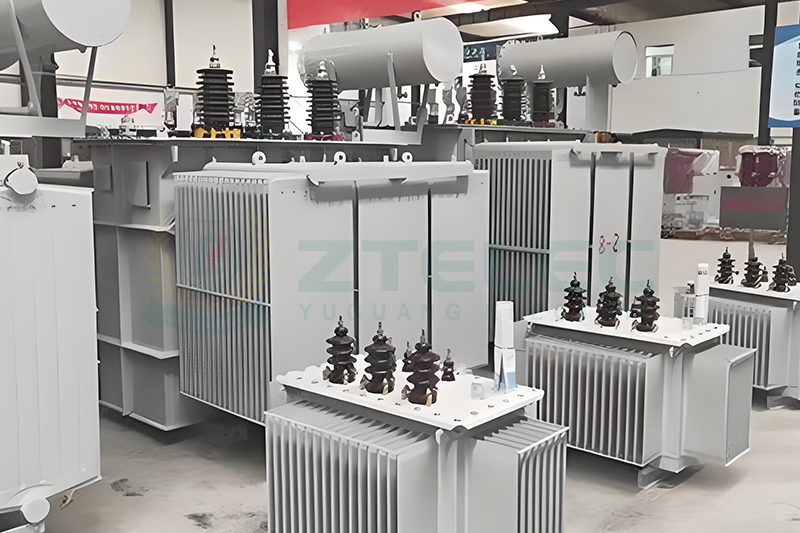
1. Determine Load Capacity and Power Consumption Characteristics
Properly Match Transformer Capacity
When selecting a distribution transformer, it is incorrect to assume that larger capacity always means better performance. Reasonable capacity matching should follow these principles. The long-term load rate should generally be maintained between 60% and 80% to balance operating efficiency and equipment lifespan. Future load growth over the next three to five years should be considered, leaving adequate capacity margin. Long-term light-load operation should be avoided, as it can reduce transformer efficiency and increase no-load losses.
Analyze Load Type Characteristics
Different load types place different demands on transformer performance. For systems with a high proportion of motor loads, the impact of motor starting current and short-term shock loads should be carefully evaluated. When nonlinear loads such as frequency converters or rectifiers are present, harmonic effects on transformer heating and losses must be considered. For continuously operating loads, particular attention should be paid to temperature rise limits and the transformer’s heat dissipation capability.
2. Select the Appropriate Transformer Type
Oil-Immersed Distribution Transformer
Oil-immersed transformers offer good heat dissipation performance and strong overload capability. They typically have a lower initial purchase cost, relatively simple daily maintenance requirements, and a long service life. These transformers are well suited for outdoor installations, areas with less stringent fire protection requirements, and projects with limited budgets.
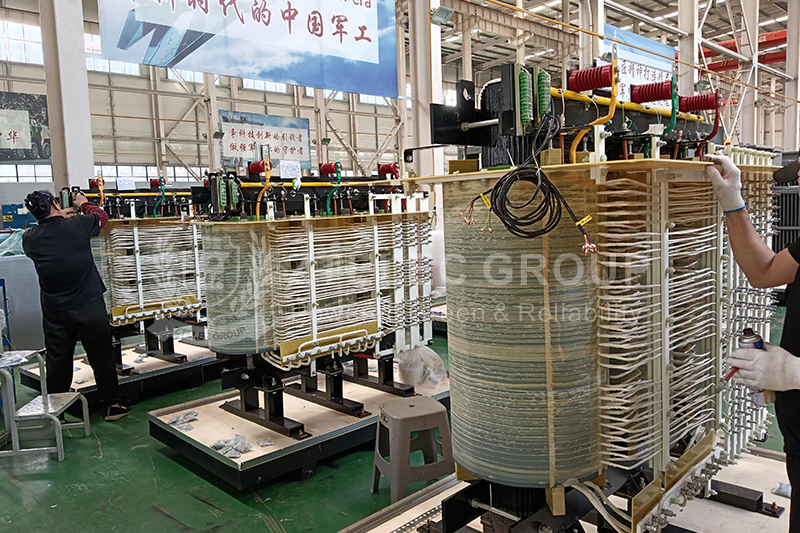
Dry-Type Distribution Transformer
Dry-type transformers provide excellent fire resistance and eliminate the risk of oil leakage or explosion. They are environmentally friendly and can be installed close to load centers, improving power distribution efficiency. Dry-type transformers are ideal for indoor installations, such as basements and high-rise buildings, locations with strict fire safety regulations, and environmentally sensitive areas.
3. Core Technical Parameter Analysis
Voltage Level
The input voltage should be determined according to local power grid conditions, such as 10kV, 20kV, or 35kV. The output voltage is typically 400/230V in a three-phase four-wire system, which is suitable for most industrial and commercial applications.
Impedance Voltage
The typical impedance voltage range for 50kVA–500kVA transformers is 4% to 6%. Lower impedance provides better voltage regulation but results in higher short-circuit current. Higher impedance can effectively limit short-circuit current but may lead to greater voltage fluctuation under load. The appropriate value should be selected based on system protection coordination.
Energy Efficiency Level
Energy efficiency standards vary by region. In China, transformers must comply with GB 20052, while European markets commonly reference IE1, IE2, IE3, and IE4 efficiency classes. Priority should be given to high-efficiency transformers rated IE3 or above. Although the initial investment may be higher, these transformers significantly reduce energy losses and operating costs over their service life.
Cooling Method
Oil-immersed transformers typically use ONAN or ONAF cooling methods, while dry-type transformers commonly use AN or AF cooling. The cooling method should be selected according to ambient temperature, load conditions, and installation environment.

4. Environmental Conditions and Installation Requirements
Environmental factors play a critical role in transformer selection. In high-temperature regions, sufficient temperature rise margin and appropriate cooling methods must be ensured. In humid or dusty environments, enhanced insulation performance and higher protection levels are required. For space-constrained installations, transformer dimensions and operating noise levels should be carefully evaluated to meet site requirements.
5. Insulation System and Key Materials
The long-term reliability of a distribution transformer largely depends on the quality of its insulation system. Key aspects include winding insulation materials, insulating bushings, and insulating structural components. The heat resistance and aging resistance of insulation materials should be verified, and preference should be given to products that have passed type tests and third-party inspections. For projects requiring continuous long-term operation, high-quality insulation systems can significantly extend transformer service life.
6. Certification Standards and After-Sales Support
A high-quality 50kVA–500kVA distribution transformer should be supplied with complete factory test reports and comply with international standards such as IEC, IEEE, CE, and ISO. Clear technical specifications, installation manuals, stable delivery schedules, and reliable after-sales technical support are essential factors for long-term project success.
Common Selection Misconceptions and How to Avoid Them
One common mistake is determining transformer capacity solely based on current load while ignoring future expansion needs. Adequate capacity reserve should always be planned. Another misconception is focusing excessively on low purchase price while neglecting energy efficiency and operational reliability. A Total Cost of Ownership analysis helps balance initial investment with long-term operating expenses. Finally, overlooking installation environment requirements can lead to improper selection; a detailed site assessment should always be conducted before procurement.
Selecting a suitable 50kVA–500kVA distribution transformer requires comprehensive evaluation rather than comparison of a single parameter. Capacity matching, load characteristics, energy efficiency level, environmental conditions, and long-term operating costs must all be considered. Scientific and rational selection improves power system safety and stability while significantly reducing operation and maintenance costs.
If you require customized transformer selection solutions for industrial projects, new energy power distribution systems, or overseas applications, please feel free to contact us for professional technical support.
1250kVA oil immersed transformer price
1600kVA oil immersed transformer
FR4 Machined Parts
1250kVA oil immersed transformer
Filament Wound Epoxy Tube
- more+releated article
- 2026-02-281250kVA Oil-Immersed Transformer Price and Cos
- 2026-02-27Detailed Explanation of FR4 Machined Parts Mac
- 2026-02-27Custom 1600kVA Oil Immersed Transformer Manufa
- 2026-02-26Precision FR4 Machined Parts for Electrical In
- 2026-02-26High-Quality Industrial 1250kVA Oil-Immersed T
- 2026-02-25Why is Filament Wound Epoxy Tube More Expensiv
- 2026-02-25XUJUE ELECTRICAL Officially Resumes Operations
- 2026-02-25Solar Duty Transformer: Sizing Challenges, Inv
- 2026-02-11Ztelecgroup Annual Gala Successfully Held
- 2026-02-10G10 epoxy board in the insulation parts of ele
- ELECTRICAL INSULATION BOARD MATERIALS
- ELECTRICAL INSULATION MATERIALS
- POWER TRANSFORMER
- ENAMELED WIRE
- SWITCHGEAR



1250kVA oil immersed transformer price
1600kVA oil immersed transformer
FR4 Machined Parts
1250kVA oil immersed transformer
Filament Wound Epoxy Tube
solar duty transformer
G10 epoxy board
G10 Fiber Sheet
G10
G11 epoxy sheet
G11 Fiber Sheet
Laminated wood
electrical laminated wood
Black FR4 Anti-Static Fiberglass Board
FR4 anti-static fiberglass board
Black FR4 Anti-static Board
ddp
DDP diamond dot paper
DDP Diamond Dotted Paper
DDP diamond dotted paper supplier
Electrical Paper Pressboard
3240 fiberglass sheet
FR4
Factory Insulation Paper
FR4 epoxy board