
How to Select a 100 kVA–500 kVA Distribution Transformer for Industrial and Commercial Power Systems
Distribution transformers in the 100 kVA–500 kVA range are widely used in factories, commercial buildings, data centers, logistics parks, and urban infrastructure projects. They form the backbone of low- and medium-voltage power distribution systems. Choosing the right transformer has a direct influence on power supply reliability, operating efficiency, maintenance workload, and long-term operating costs.
This guide explains how to select a suitable 100 kVA–500 kVA distribution transformer from a practical engineering perspective, focusing on capacity planning, transformer type, electrical parameters, installation conditions, and lifecycle cost considerations.
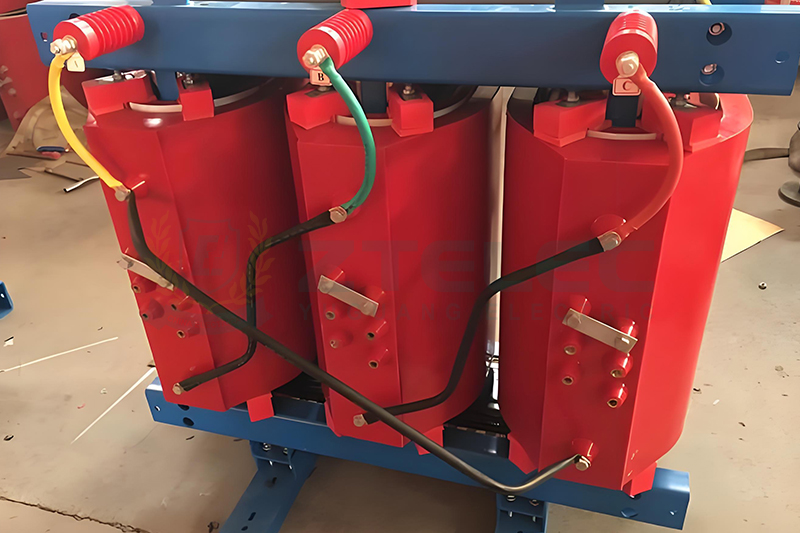
Capacity Selection Based on Actual Load
Transformer capacity selection should always start from a realistic assessment of electrical load. The total installed capacity of all connected equipment is the baseline, but it must be adjusted by considering the simultaneous usage factor and expected operating patterns. In most industrial and commercial projects, not all loads operate at full power at the same time.
Future expansion should also be taken into account. A capacity margin of approximately 10%–20% is commonly recommended to avoid premature replacement. Under normal conditions, the long-term operating load should remain within 70%–80% of the transformer’s rated capacity. This range offers a good balance between efficiency, thermal performance, and service life.
For applications involving impact or starting loads, such as motors, compressors, elevators, or large HVAC systems, a higher transformer capacity may be required to handle inrush currents and avoid excessive voltage drops.
Choosing Between Oil-Immersed and Dry-Type Transformers
The selection between oil-immersed and dry-type transformers mainly depends on the installation environment, fire safety requirements, and maintenance preferences.
Oil-immersed transformers use mineral oil or ester oil as the cooling and insulating medium. They are typically installed outdoors or in independent substations where fire protection conditions are relatively relaxed. These transformers usually offer high efficiency and lower initial purchase costs, but they require periodic oil testing and careful management to prevent leakage.
Dry-type transformers rely on air cooling or epoxy resin casting and are commonly installed indoors, in basements, or in high-rise buildings. Their key advantages are enhanced fire safety, environmental friendliness, and minimal maintenance requirements. Although the initial cost is generally higher, long-term maintenance expenses are lower.
In practical applications, oil-immersed transformers are often preferred for industrial plants with dedicated substations, while dry-type transformers are more suitable for shopping malls, office buildings, hospitals, and data centers where fire safety and space constraints are critical.
Key Electrical and Technical Parameters
Voltage Configuration
Correct voltage selection is essential for stable system operation. The primary voltage should match the local power grid, such as 11 kV, 22 kV, or 33 kV. The secondary voltage must align with the requirements of downstream equipment, commonly a 400V/230V three-phase four-wire system.
Transformers equipped with voltage regulating taps, such as ±5%, allow operators to adapt to grid voltage fluctuations and maintain stable output voltage under varying supply conditions.
Energy Efficiency and Loss Performance
High-efficiency transformers usually involve higher upfront investment, but they can significantly reduce electricity costs over their operating lifetime. Compliance with standards such as IEC 60076 or IEEE C57.12.00 is an important reference point.
When comparing models, both no-load losses and load losses should be evaluated. In systems with long operating hours or fluctuating loads, low-loss designs provide faster cost recovery and lower total cost of ownership.
Insulation Class and Temperature Rise
Dry-type transformers commonly use F or H class insulation. Proper control of temperature rise improves operational stability and extends service life, particularly in demanding industrial environments or areas with high ambient temperatures.
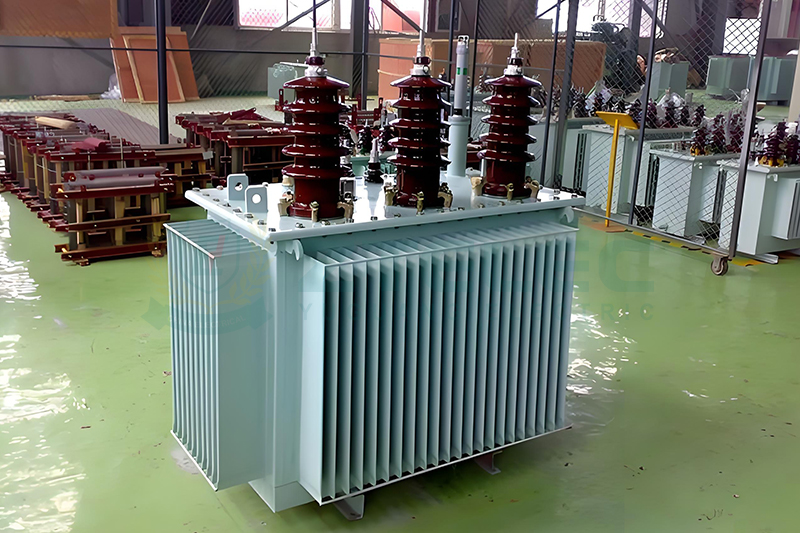
Environmental and Installation Conditions
Installation conditions play a decisive role in transformer performance and reliability. Ambient temperature, altitude, ventilation, and available heat dissipation space must all be considered during selection.
Noise level requirements are especially important in commercial buildings and office environments. In addition, the enclosure protection rating, such as IP20, IP23, or IP54, should match the site conditions to prevent dust, moisture, or accidental contact.
A well-matched installation environment reduces failure rates, minimizes maintenance interventions, and ensures stable long-term operation.
Brand, Certification, and Service Support
Selecting a transformer from a reputable manufacturer is just as important as choosing the right technical parameters. Certifications such as ISO 9001, CE, UL, and IEEE indicate compliance with recognized quality and safety standards.
Local service availability, warranty terms, and proven project references should also be evaluated. Manufacturers with experience in similar industrial or commercial applications are better positioned to provide reliable solutions and technical support.
Recommended Selection Process for 100 kVA–500 kVA Transformers
The selection process typically begins with load assessment and capacity determination within the 100 kVA–500 kVA range. The appropriate transformer type is then chosen based on environmental and safety requirements. Voltage configuration and impedance must be verified to ensure compatibility with the power system and protection scheme.
Energy efficiency levels should be compared with a focus on long-term operating costs rather than initial price alone. Installation conditions and enclosure protection must be confirmed, followed by a review of brand certification and service capabilities. Finally, a total cost of ownership analysis helps support a well-informed purchasing decision.
100 kVA–500 kVA distribution transformers play a central role in industrial and commercial power systems. A well-structured selection process ensures safe and stable operation while reducing energy consumption and lifecycle costs.
If you are planning a new project or upgrading an existing power system, working with an experienced transformer manufacturer can simplify the selection process. Customized transformer solutions tailored to your operating conditions and standards can deliver long-term reliability and value.
1250kVA oil immersed transformer price
1600kVA oil immersed transformer
FR4 Machined Parts
1250kVA oil immersed transformer
Filament Wound Epoxy Tube
- more+releated article
- 2026-02-281250kVA Oil-Immersed Transformer Price and Cos
- 2026-02-27Detailed Explanation of FR4 Machined Parts Mac
- 2026-02-27Custom 1600kVA Oil Immersed Transformer Manufa
- 2026-02-26Precision FR4 Machined Parts for Electrical In
- 2026-02-26High-Quality Industrial 1250kVA Oil-Immersed T
- 2026-02-25Why is Filament Wound Epoxy Tube More Expensiv
- 2026-02-25XUJUE ELECTRICAL Officially Resumes Operations
- 2026-02-25Solar Duty Transformer: Sizing Challenges, Inv
- 2026-02-11Ztelecgroup Annual Gala Successfully Held
- 2026-02-10G10 epoxy board in the insulation parts of ele
- ELECTRICAL INSULATION BOARD MATERIALS
- ELECTRICAL INSULATION MATERIALS
- POWER TRANSFORMER
- ENAMELED WIRE
- SWITCHGEAR



1250kVA oil immersed transformer price
1600kVA oil immersed transformer
FR4 Machined Parts
1250kVA oil immersed transformer
Filament Wound Epoxy Tube
solar duty transformer
G10 epoxy board
G10 Fiber Sheet
G10
G11 epoxy sheet
G11 Fiber Sheet
Laminated wood
electrical laminated wood
Black FR4 Anti-Static Fiberglass Board
FR4 anti-static fiberglass board
Black FR4 Anti-static Board
ddp
DDP diamond dot paper
DDP Diamond Dotted Paper
DDP diamond dotted paper supplier
Electrical Paper Pressboard
3240 fiberglass sheet
FR4
Factory Insulation Paper
FR4 epoxy board