
Common Fault Analysis and Treatment Methods for Oil-Immersed Transformers
Oil-immersed transformers are widely applied in power transmission and distribution systems, industrial facilities, and large-scale infrastructure projects due to their excellent heat dissipation capability, stable insulation performance, and strong overload capacity. However, under long-term operation, oil-filled transformers inevitably face various faults caused by load fluctuations, environmental factors, insulation aging, and mechanical stress. A systematic understanding of common fault types and corresponding treatment methods is essential for improving operational reliability and extending service life.
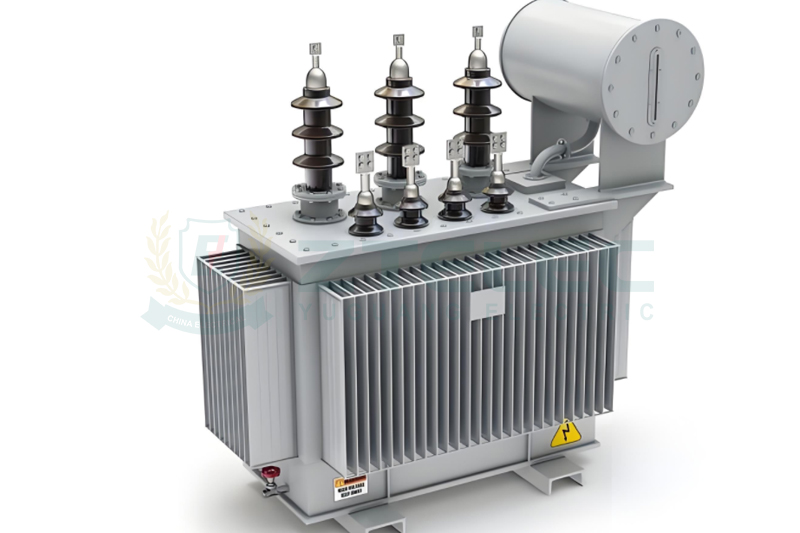
Common Fault Types and Treatment Methods of Oil-Immersed Transformers
Insulating Oil Faults
Insulating oil plays a critical role in both insulation and cooling. Long-term thermal stress and oxidation can lead to oil deterioration, reflected by an increased acid value and reduced dielectric strength. Moisture ingress is another frequent issue, significantly lowering breakdown voltage and increasing the risk of partial discharge. In addition, abnormal dissolved gas content, such as hydrogen, methane, or acetylene, often indicates internal electrical or thermal faults.
Treatment measures include oil dehydration and degassing to restore dielectric performance, as well as the use of adsorbents such as silica gel or molecular sieves to remove acidic compounds. When the acid value exceeds 0.1 mg KOH/g or the breakdown voltage falls below 40 kV, oil replacement is recommended to ensure safe operation.
Winding Faults
Winding faults are among the most common and dangerous transformer failures. Inter-turn short circuits usually result from insulation aging or mechanical damage, leading to localized overheating. Winding-to-ground faults occur when main insulation fails, allowing contact between the winding and the core or tank. In addition, high short-circuit currents may cause winding deformation, compromising mechanical strength.
Minor inter-turn short circuits may be addressed through insulation drying and impregnation. Severe winding damage generally requires factory rewinding or complete replacement. For winding deformation, mechanical correction and reinforcement should be carried out to restore structural integrity.
Core Faults
Under normal conditions, the transformer core should be grounded at a single point. Multiple grounding points can create circulating currents, resulting in local overheating. Another typical core fault is inter-laminar short circuits caused by damaged insulation between silicon steel sheets, which increase eddy current losses.
Fault handling involves locating abnormal grounding points using DC or AC detection methods, followed by insulation treatment and isolation. Prompt correction can effectively prevent further thermal damage.
Bushing Faults
Bushings are critical external insulation components. Surface contamination, aging, or cracks may cause flashover, especially in humid environments. In severe cases, internal insulation failure can lead to bushing explosion, posing significant safety risks.
Regular cleaning of bushing surfaces and inspection of sealing conditions help prevent moisture ingress. If cracks, oil leakage, or severe discharge marks are detected, immediate bushing replacement is necessary.
Tap Changer Faults
Tap changers are prone to faults due to frequent mechanical operation. Poor contact can cause localized overheating and is often reflected by abnormal gas generation detected through dissolved gas analysis. Mechanical sticking may also occur due to wear or operating mechanism failure.
Routine measurement of contact resistance ensures good electrical performance. The sealing condition of the tap changer oil compartment should be checked regularly to prevent oil contamination between the tap changer and the main tank.
Cooling System Faults
An efficient cooling system is essential for controlling transformer temperature. Radiator blockage caused by dust or debris reduces heat dissipation efficiency. Oil pump failure can disrupt oil circulation, while fan stoppage decreases air-cooling effectiveness, all of which may lead to excessive oil temperature.
Corrective actions include periodic radiator cleaning, inspection of oil pump bearings and motor insulation, and verification of temperature control circuits to ensure reliable cooling system operation.
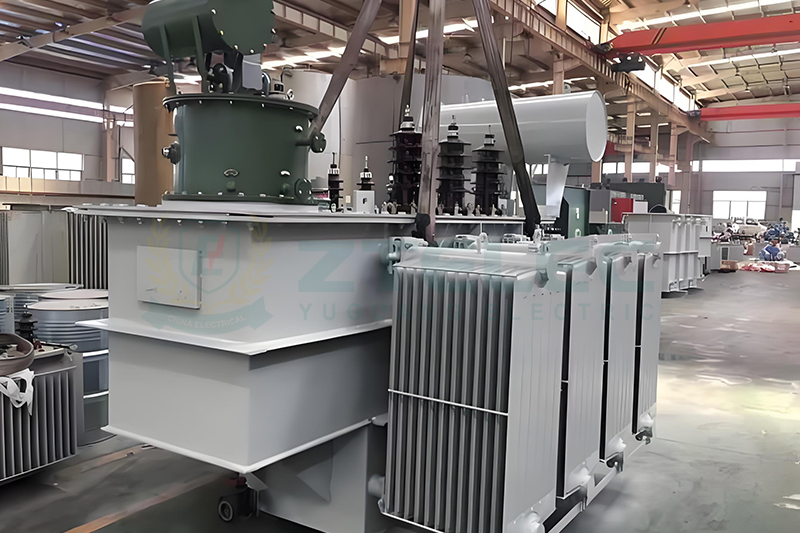
Fault Diagnosis Methods and Detection Technologies
Dissolved Gas Analysis (DGA)
DGA is one of the most effective diagnostic tools for oil-immersed transformers. By analyzing the type and concentration of gases dissolved in the oil, fault characteristics can be identified. Acetylene is typically associated with electrical discharge, while elevated carbon monoxide and carbon dioxide levels indicate overheating of solid insulation.
Electrical Testing
Electrical tests provide direct information on transformer condition. Insulation resistance testing evaluates overall insulation health, DC resistance testing helps identify winding connection issues, and turns ratio testing verifies winding accuracy. Frequency Response Analysis is particularly effective for diagnosing winding deformation.
Partial Discharge Detection
Early-stage insulation defects can be detected through partial discharge monitoring. A combination of ultrasonic localization and electrical measurement techniques allows precise identification of discharge sources.
Infrared Thermographic Inspection
Infrared thermography enables non-contact temperature measurement of bushings, joints, and tank surfaces. Abnormal temperature rise can quickly reveal local overheating and potential fault locations.
Oil Quality Analysis
Routine oil testing, including dielectric strength, moisture content, acid value, and interfacial tension, provides valuable insight into insulation oil condition and overall transformer health.
The operational reliability of oil-immersed transformers depends on systematic maintenance, accurate fault diagnosis, and timely corrective actions. By identifying common fault types and applying appropriate treatment methods, transformer service life can be significantly extended while reducing unexpected outages. For critical power equipment, it is strongly recommended to combine periodic inspections with professional diagnostic technologies to enhance power system safety and long-term stability.
- more+releated article
- 2026-01-04Common Power Transformer Faults: Causes, Solut
- 2025-12-312026 New Year Holiday Notice
- 2025-12-31Operation, Maintenance, and Service Life Manag
- 2025-12-30How to Select a 100 kVA–500 kVA Distribution
- 2025-12-29The Impact of NHN NMN Composite Insulation on
- 2025-12-26Practical Application of GPO-3 Insulation Boar
- 2025-12-2510kV Transformer Replacement Timeline: Install
- 2025-12-25Low Smoke EN45545 GPO3 UPGM203 Laminated Board
- 2025-12-24Merry Christmas — ZTelecgroup Christmas Cele
- 2025-12-24How to Select a Suitable 50kVA–500kVA Distri
- ELECTRICAL INSULATION BOARD MATERIALS
- ELECTRICAL INSULATION MATERIALS
- POWER TRANSFORMER
- ENAMELED WIRE
- SWITCHGEAR



- transformer overheatingtransformer overloadtransformer short circuitinsulation failure transformertransformer maintenancepower transformer faults11168kVA oil-immersed transformercommercial power transformer500 kVA distribution transformer100 kVA distribution transformerindustrial transformer selectionSingle-Phase Dry-Type Transformer10kV transformer replacementdry type transformer50kVA distribution transformertransformer selection guide500kVA distribution transformer20kV 2500kVA Dry-Type Transformermedium voltage power transformer66kV power transformer66kV transformer applicationsindustrial power transformertransformer manufacturing process upgradeoil-immersed transformer reliabilitypower transformer service life