
How to Choose Epoxy Laminate Materials for Generators?G10, FR4, and G11
In generator and electrical equipment manufacturing, the selection of epoxy laminate materials directly affects equipment performance, service life, and operational safety. G10, FR4, and G11 are three commonly used epoxy sheet materials. Although they look similar, their core properties differ significantly. This article provides a detailed comparison of these materials and their suitable application scenarios, offering technical guidance for selecting epoxy sheets used in generators.
Role of Epoxy Sheets in Generators
Epoxy laminates serve several essential functions inside generators:
Electrical Insulation: Provide physical isolation between live parts to prevent short circuits.
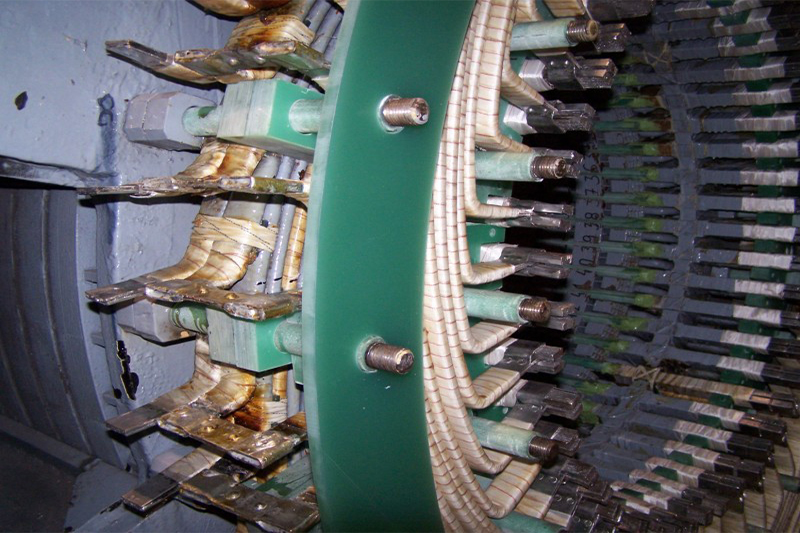
Structural Support: Offer mechanical support and fixation for coils, windings, and other key components.
Thermal Stability: Maintain stable performance under high-temperature operating conditions.
Environmental Protection: Resist moisture ingress, chemical corrosion, and physical abrasion.
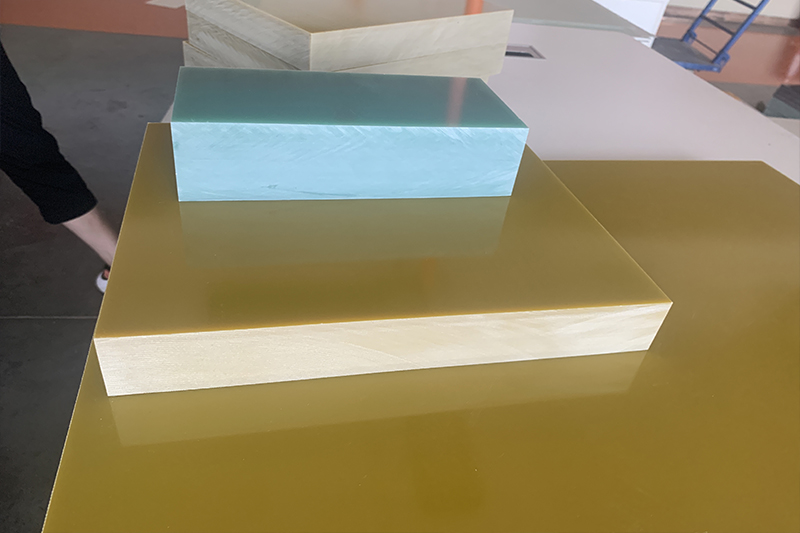
Performance Differences Among G10, FR4, and G11
1. Thermal Resistance
G10 and FR4 generally have a heat resistance rating of 130°C, corresponding to Class B insulation.
G11 offers heat resistance up to 150°C or above, classified as Class F insulation. It is suitable for generators operating under high speed, heavy load, or high-temperature conditions.
2. Flame Retardancy
FR4 meets the UL94 V-0 flame-retardant standard and provides reliable fire safety.
G10 is non-flame-retardant, making it unsuitable for applications with mandatory fire-resistance requirements.
G11 can be customized into flame-retardant versions based on project needs.
3. Electrical Insulation Performance
All three materials offer excellent electrical insulation, but their advantages vary:
FR4 has the most stable insulation performance, especially in environments with temperature and humidity fluctuations.
G10 features very low water absorption, but due to its non-flame-retardant nature, safety evaluation is required for generator applications.
G11 maintains strong insulation performance under high temperatures, making it ideal for high-temperature generator models.
4. Mechanical Strength
G10 delivers the highest mechanical strength among the three, making it suitable for:
Generator components with high mechanical loads
High-vibration working environments
Complex structural support inside generators
However, G10 must not be used in applications that require flame-retardant materials.
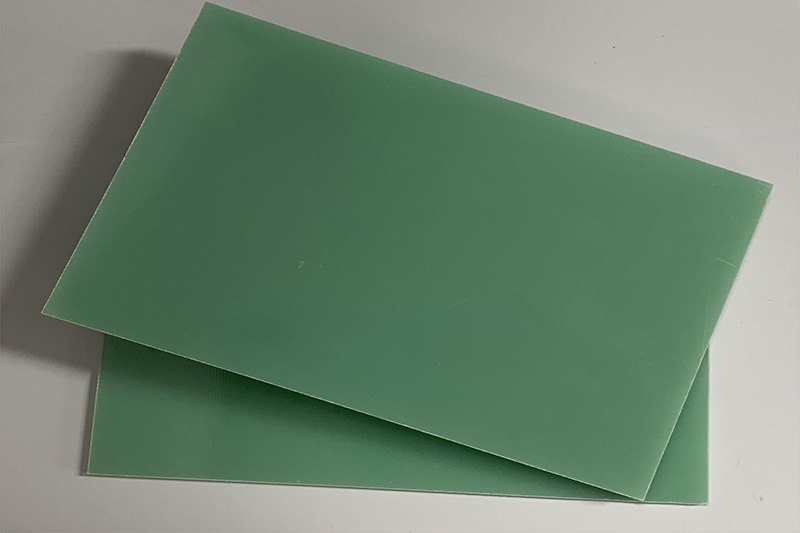
Application Scenarios of G10, FR4, and G11 in Generator
1. FR4 epoxy board
Insulation components for small and medium-sized generators
Power generation equipment in mild operating environments
Projects with strict cost control
Standard electrical isolation boards
2. G10 epoxy board
Core components of medium and high-temperature generator sets
Applications with high requirements for mechanical strength
Insulation structural components for industrial generators
Generator slot wedges, spacer sheets, and end support parts of windings
3. G11 epoxy board
High-temperature generator sets (gas turbine generators, steam turbine generators)
Heavy-duty industrial generators
Power generation equipment in harsh operating environments
Insulation components for critical parts of generators
How to Choose the Right Epoxy Board for Generators?
1. Evaluate Working Temperature
Working temperature below 130℃: FR4 is preferred
Working temperature between 130℃ and 140℃: G10 can be used
Working temperature above 150℃: G11 should be selected
2. Analyze Mechanical Properties
Conventional support components: FR4 or G10 can be used
Components with high mechanical stress: G10 or G11 should be selected
High-frequency vibration conditions: G10 or G11 (both have better fatigue resistance)
3. Consider Environmental Conditions
Conventional indoor conditions: FR4 can be used
High humidity or chemical medium erosion environment: G10 or G11 should be selected
Outdoor or harsh working conditions: G11 should be selected
4. Balance Budget and Performance
Cost priority projects: FR4 can be used
Standard industrial-grade generator equipment: G10 should be selected
Critical or high-end generator equipment: G11 should be selected
The performance and cost of three types of epoxy boards are distributed in a gradient:
FR4 is economical and practical, suitable for low-temperature working conditions.
G10 can achieve a balance between mechanical performance and procurement cost.
G11 is the best choice for high-temperature and harsh working conditions.
A scientific selection of epoxy laminate sheets must be based on a comprehensive analysis of the generator’s actual operating conditions. Key factors include defining the temperature range, mechanical load, environmental conditions, and budget scope. When selection uncertainties arise, choosing higher-grade materials is recommended to reduce the risk of failure. From a cost-effectiveness perspective, the optimal choice is an insulation material that precisely matches the specific application requirements.
- more+releated article
- 2025-12-13How to Select and Use Phenolic Cloth-base Lami
- 2025-12-13How Much Does Bakelite Sheet Cost? 2025 Price
- 2025-12-13Why are most 3240 epoxy boards yellow?
- 2025-12-13What are the Main Applications of FR4 Epoxy Bo
- 2025-12-13Why Does the Price of Insulating Paperboard Va
- 2025-12-13Heat-Resistant DDP Insulation Paper
- 2025-12-13Comparison of Heat-Resistant DDP Insulating Pa
- 2025-12-13G10 and FR4 Epoxy Boards: Commonly Used for Ge
- 2025-12-13The Price of Heat-Resistant DDP Insulation Pap
- 2025-12-13How to Choose Epoxy Laminate Materials for Gen
- ELECTRICAL INSULATION BOARD MATERIALS
- ELECTRICAL INSULATION MATERIALS
- POWER TRANSFORMER
- ENAMELED WIRE
- SWITCHGEAR

- Price of a 1600kVA 10kV Cast Resin Dry-Type Transformer35kV dry-type transformer protection10kV oil-immersed transformer110 kV oil-immersed transformerOil-Immersed Transformer Maintenance66 kV oil-immersed transformer110 kV oil-immersed transformersdry-type transformer33 kV oil-immersed transformer69/66 kV Three-Phase Oil-Immersed Power TransformersDry-Type Distribution Transformer Pricedry-type distribution transformerdry type transformerpower transformer 110kVoil-immersed transformertransformer procurement guide 2025power system upgrade stepssubstation upgrade66kV equipment selection66kV transformer system33kV to 66kV upgrade66 kV oil-immersed power transformer220 kV to 66 kV step-down transformeroil-immersed transformer for substation66 kV transformer application