
Protection Configuration Principles for 35kV Dry-Type Transformers | Safety & Reliability Guide
With the rapid development of smart grids and renewable energy, 35kV dry-type transformers are widely applied in industrial parks, data centers, renewable power stations, and urban distribution networks. To ensure long-term stable operation, a scientific and standardized protection configuration is essential. This article explains the core protection schemes, design principles, and implementation points that enhance operational safety and system reliability.
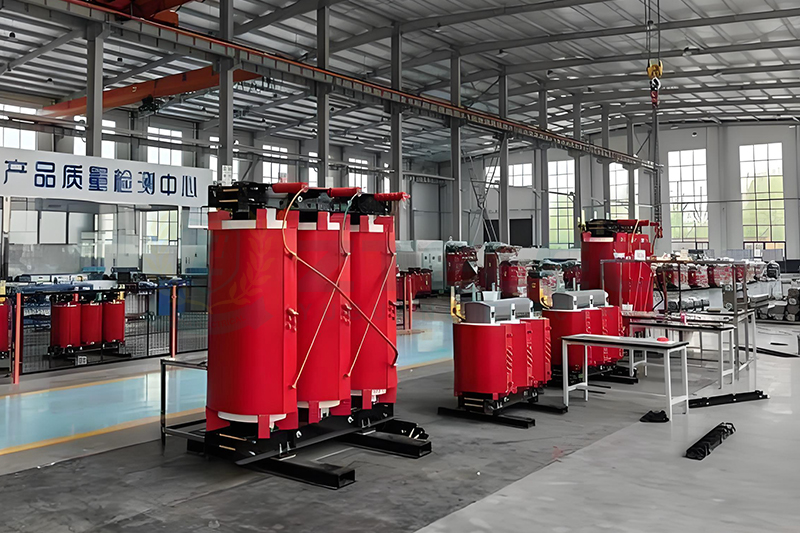
Core Protection Configuration for 35kV Dry-Type Transformers
1. Primary Protection: Differential Protection
Differential protection provides fast and accurate identification of internal transformer faults such as inter-turn short circuits and winding grounding faults. Its high sensitivity and clear protection range make it the most essential first-line protection.
2. Backup Protection: Overcurrent Protection
Overcurrent protection acts as a secondary protection when differential protection fails and responds to external short circuits. Typical configurations adopt multi-stage settings (I>, II>, III>) and ensure coordinated operation with upstream line protection to avoid misoperation.
3. Temperature Protection
Dry-type transformers are highly sensitive to temperature, and excessive heat directly shortens insulation life. Common configurations include PT100/NTC sensors, automatic fan control, and threshold settings such as 130°C for alarm and 155°C for over-temperature tripping.
4. Grounding Protection
Grounding protection detects low-current grounding faults and prevents further insulation deterioration. Typical methods include zero-sequence overcurrent protection or zero-sequence overvoltage protection, selected according to the system’s grounding mode.
5. Gas-Related Monitoring (Non-Oil-Type Transformers)
Dry-type transformers do not require Buchholz relays. Instead, optional monitoring includes online partial discharge detection and air humidity monitoring. This is especially suitable for data centers, tunnel substations, and wind turbine tower transformers.
Core Configuration Principles for 35kV Dry-Type Transformer Protection
1. Graded Protection Principle
The protection system should include layered and coordinated functions: Primary protection such as differential and instantaneous overcurrent protection ensures rapid fault clearance. Backup protection such as zero-sequence and multi-stage overcurrent protection provides secondary support. Auxiliary protection includes temperature control and cooling system monitoring.
2. Customized Configuration Principle
Protection settings must match transformer capacity, load characteristics, operational environment, and system importance. Critical-load transformers may require redundant dual protections, while general industrial applications may adopt economical configurations. Special environments with high humidity or dust require enhanced insulation and temperature monitoring.
3. Intelligent Protection Principle
Modern 35kV dry-type transformers benefit greatly from intelligent monitoring, network communication, and data analytics. Real-time condition assessment, early fault warning, and remote monitoring significantly improve operational reliability and maintenance efficiency.
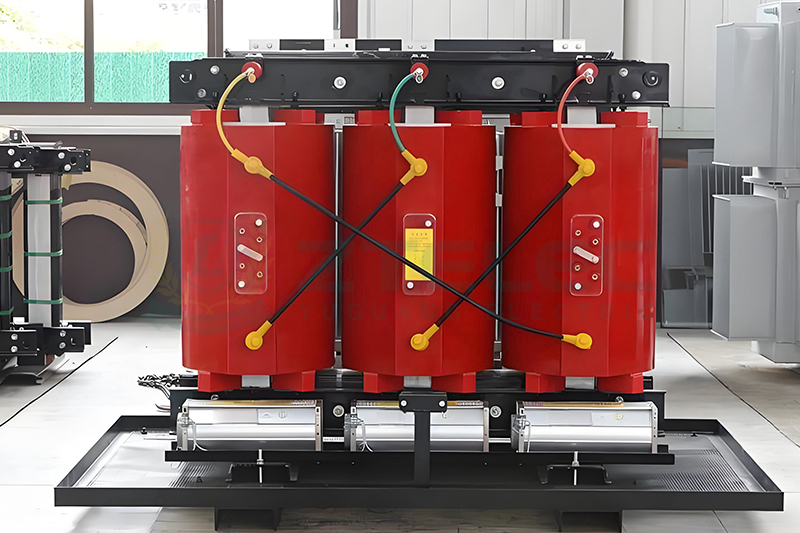
Key Implementation Points for Ensuring Safe Transformer Operation
1. Accurate Protection Setting and Verification
Protection settings must be calculated by professionals and verified regularly. Relay tests, CT circuit inspections, and breaker trip circuit verification ensure protection devices operate reliably.
2. CT Configuration and Polarity Matching
Differential protection requires matching CT models, ratios, and characteristics. Correct polarity is critical to avoid maloperation and ensure accurate fault detection.
3. Temperature Control System Maintenance
Regular calibration of PT100 sensors and temperature controllers is essential. Cooling fans must be checked for automatic start/stop performance, and winding surfaces should remain clean to maintain proper heat dissipation.
4. Operating Environment Monitoring
The transformer room must maintain proper ventilation and keep ambient temperature below 40°C. Measures should be taken to prevent dust, moisture, and corrosive gases from entering the room to maintain insulation performance.
5. Preventive Testing and Regular Inspection
Routine tests such as winding DC resistance, insulation resistance, and AC withstand voltage should be conducted according to standards. These tests help identify insulation deterioration and ensure long-term operational reliability.
A stable and reliable 35kV dry-type transformer system depends on meticulous protection configuration and execution. By integrating multi-level protection settings, intelligent monitoring, and systematic maintenance, operators can significantly enhance transformer safety, reduce downtime, and extend equipment lifespan. For professionals in new energy generation, industrial distribution, data centers, and electrical engineering, adopting a scientific protection strategy is essential for achieving system stability and operational excellence.
- more+releated article
- 2025-12-13How to Select and Use Phenolic Cloth-base Lami
- 2025-12-13How Much Does Bakelite Sheet Cost? 2025 Price
- 2025-12-13Why are most 3240 epoxy boards yellow?
- 2025-12-13What are the Main Applications of FR4 Epoxy Bo
- 2025-12-13Why Does the Price of Insulating Paperboard Va
- 2025-12-13Heat-Resistant DDP Insulation Paper
- 2025-12-13Comparison of Heat-Resistant DDP Insulating Pa
- 2025-12-13G10 and FR4 Epoxy Boards: Commonly Used for Ge
- 2025-12-13The Price of Heat-Resistant DDP Insulation Pap
- 2025-12-13How to Choose Epoxy Laminate Materials for Gen
- ELECTRICAL INSULATION BOARD MATERIALS
- ELECTRICAL INSULATION MATERIALS
- POWER TRANSFORMER
- ENAMELED WIRE
- SWITCHGEAR



- Price of a 1600kVA 10kV Cast Resin Dry-Type Transformer35kV dry-type transformer protection10kV oil-immersed transformer110 kV oil-immersed transformerOil-Immersed Transformer Maintenance66 kV oil-immersed transformer110 kV oil-immersed transformersdry-type transformer33 kV oil-immersed transformer69/66 kV Three-Phase Oil-Immersed Power TransformersDry-Type Distribution Transformer Pricedry-type distribution transformerdry type transformerpower transformer 110kVoil-immersed transformertransformer procurement guide 2025power system upgrade stepssubstation upgrade66kV equipment selection66kV transformer system33kV to 66kV upgrade66 kV oil-immersed power transformer220 kV to 66 kV step-down transformeroil-immersed transformer for substation66 kV transformer application