
What is a Forced-Air Cooled Dry-Type Transformer?
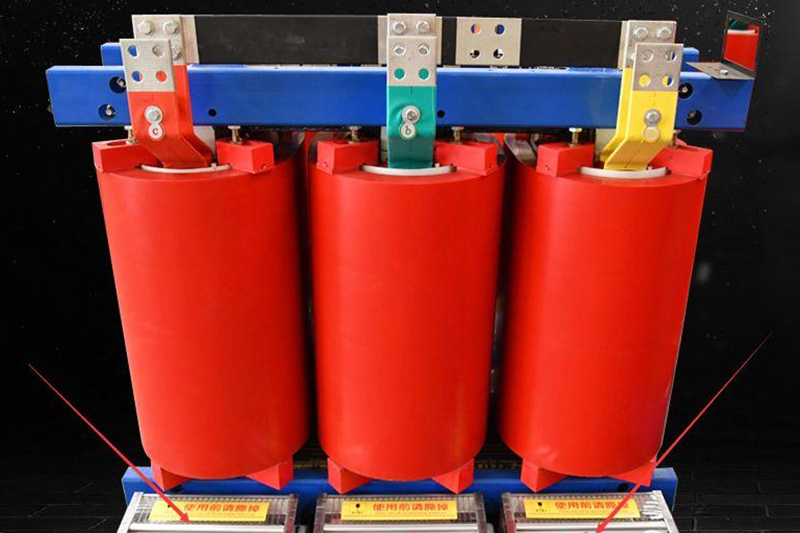
In modern power systems, dry-type transformers are widely used due to their oil-free design and excellent fire resistance. Among them, the forced-air cooled dry-type transformer stands out for its enhanced overload capacity through active cooling. This guide provides a detailed overview of this equipment, including the necessity of cooling, cooling methods, device definition, working principle, key advantages, and operational considerations.
Why Do Dry-Type Transformers Need Cooling?
During operation, transformer windings generate copper and iron losses as current flows, which convert into heat. If this heat is not dissipated efficiently:
• Insulation layers may age prematurely, reducing service life.
• Severe overheating can cause insulation breakdown, equipment failure, or fire, threatening power supply stability.
Cooling Methods for Dry-Type Transformers
Cooling methods are generally classified into:
1. AN – Air Natural (Self-Cooled): Relies on natural air convection to dissipate heat. The transformer’s rated capacity refers to the power it can continuously operate under natural cooling.
2. AF – Forced-Air Cooled: Uses fans to blow air over windings, accelerating heat dissipation. Forced-air cooling is an auxiliary system designed to enhance the transformer’s overload capacity.
Introduction to Forced-Air Cooled Dry-Type Transformers
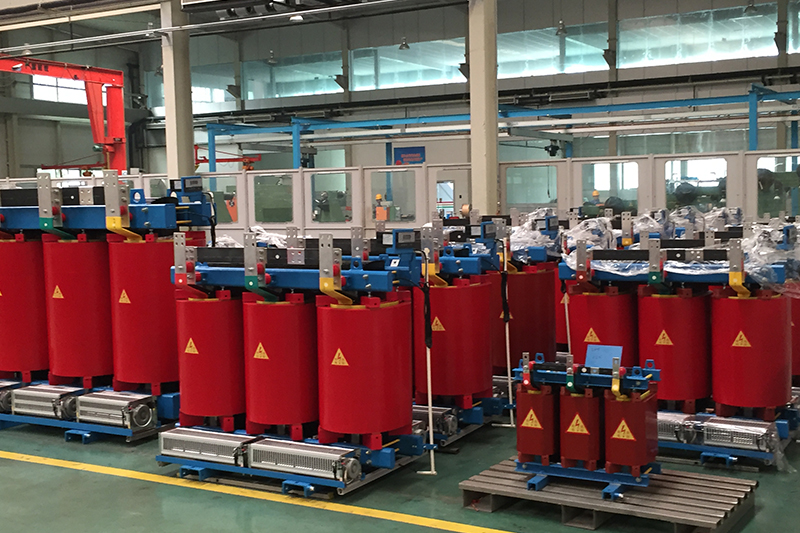
A forced-air cooled dry-type transformer is a conventional dry-type transformer equipped with fans controlled by a temperature sensor system. By combining natural cooling with forced convection, it improves heat dissipation while retaining the oil-free and fire-safe characteristics of standard dry-type transformers. This design effectively addresses the limited overload capacity of conventional dry-type transformers.
Working Principle
Pt100 platinum resistance sensors embedded in the windings monitor temperature with high accuracy.
Sensors continuously transmit winding temperature to an intelligent temperature controller.
When the winding temperature reaches a preset threshold (commonly 80℃ or 110℃), the controller activates the cooling fans.
Fans blow directed airflow onto the windings and core, rapidly dissipating heat.
When the temperature drops to a lower preset value (typically 70℃), fans shut off, returning the transformer to natural cooling mode to save energy.
Core Advantages of Forced-Air Cooled Dry-Type Transformers
Compared to naturally cooled transformers, forced-air cooled transformers offer:
1. Enhanced Overload Capacity
Under forced-air cooling (AF mode), transformers can deliver 40%–50% more power than under natural cooling (AN mode). For example, a 1000 kVA forced-air cooled transformer can handle 1400–1500 kVA for short periods, easily managing power spikes.
2. Adaptation to Short-Term Peak Loads
Ideal for commercial complexes, industrial parks, and residential communities with peak daytime loads and lower night loads. Fans operate during peak hours for increased capacity and shut off during off-peak hours to save energy.
3. Reduced Size and Lower Cost
Forced-air cooling allows selecting a smaller transformer unit to handle high peak loads, reducing procurement, installation, and operational costs compared to a larger naturally cooled transformer.
Operation and Maintenance
To ensure reliable operation and extend service life, focus on:
1. Fan Selection
Calculate airflow based on heat losses and match fan quantity and power to ensure sufficient cooling without overconsumption.
2. Air Duct Design
Ensure fan outlets align with transformer air inlets. Provide ventilation openings and install dust screens that are cleaned regularly.
3. Noise Control
Use low-noise fans (e.g., EC motor fans) and consider soundproof covers and vibration-damping pads for installations in noise-sensitive areas.
4. Intelligent Monitoring
Integrate IoT modules for remote monitoring of winding temperature, fan operation, fault alerts, and performance data.
- more+releated article
- 2026-01-04Common Power Transformer Faults: Causes, Solut
- 2025-12-312026 New Year Holiday Notice
- 2025-12-31Operation, Maintenance, and Service Life Manag
- 2025-12-30How to Select a 100 kVA–500 kVA Distribution
- 2025-12-29The Impact of NHN NMN Composite Insulation on
- 2025-12-26Practical Application of GPO-3 Insulation Boar
- 2025-12-2510kV Transformer Replacement Timeline: Install
- 2025-12-25Low Smoke EN45545 GPO3 UPGM203 Laminated Board
- 2025-12-24Merry Christmas — ZTelecgroup Christmas Cele
- 2025-12-24How to Select a Suitable 50kVA–500kVA Distri
- ELECTRICAL INSULATION BOARD MATERIALS
- ELECTRICAL INSULATION MATERIALS
- POWER TRANSFORMER
- ENAMELED WIRE
- SWITCHGEAR


- transformer overheatingtransformer overloadtransformer short circuitinsulation failure transformertransformer maintenancepower transformer faults11168kVA oil-immersed transformercommercial power transformer500 kVA distribution transformer100 kVA distribution transformerindustrial transformer selectionSingle-Phase Dry-Type Transformer10kV transformer replacementdry type transformer50kVA distribution transformertransformer selection guide500kVA distribution transformer20kV 2500kVA Dry-Type Transformermedium voltage power transformer66kV power transformer66kV transformer applicationsindustrial power transformertransformer manufacturing process upgradeoil-immersed transformer reliabilitypower transformer service life